

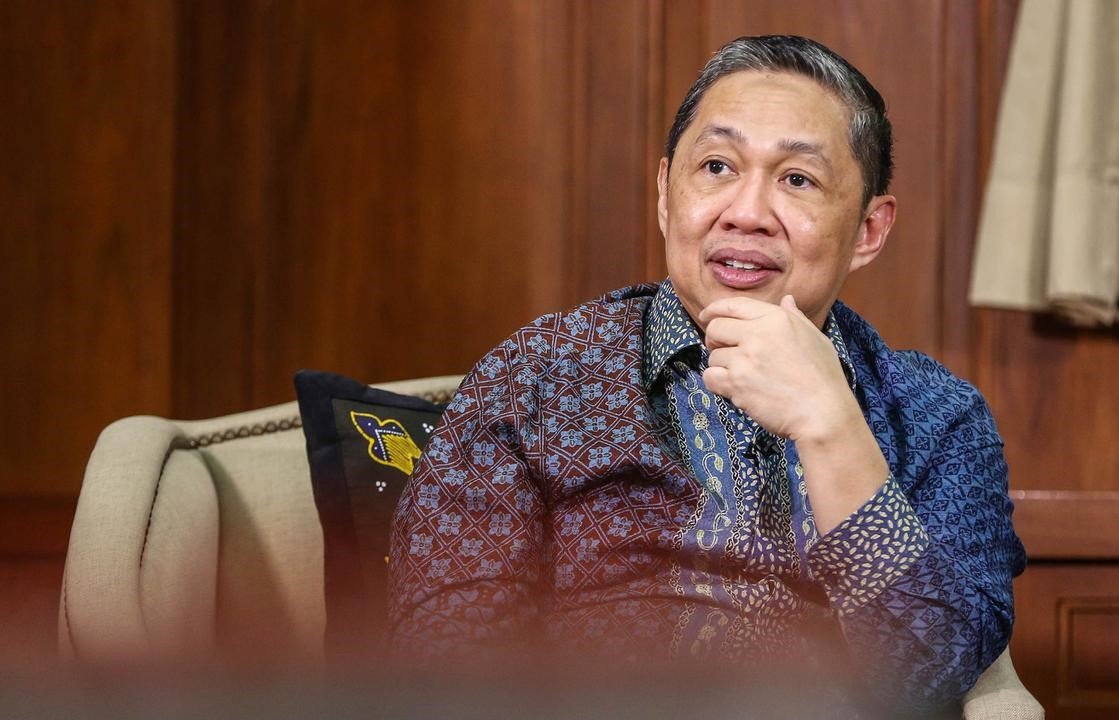
Indonesia’s Deputy Minister of Foreign Affairs Anis Matta. Photo: Ist.
JAKARTA, JAKTIMES.COM – Indonesia’s Deputy Minister of Foreign Affairs (Wamenlu) Anis Matta has called for the launch of a movement to translate Indonesian works into Arabic as a long-term strategy to strengthen Indonesia’s cultural and intellectual diplomacy in the Islamic world.
The idea was conveyed by Anis Matta during a meeting and discussion with the IndonesiaAlyoum.com team—Muhammad Anas (Founder of IndonesiaAlyoum.com) and Marwan Aziz (Media Advisor of IndonesiaAlyoum.com and Founder of Mediajakarta.com)—at the Indonesian Ministry of Foreign Affairs office in Central Jakarta on Tuesday afternoon (December 16, 2025).
According to Anis Matta, Indonesia still faces a narrative vacuum in the intellectual space of the Islamic world, particularly within academic circles.
“We need to fill the narrative gap about Indonesia in the Islamic world. Therefore, I want to encourage the emergence of an Arabic translation movement in Indonesia, which can be carried out through strategic cooperation with IndonesiaAlyoum.com,” Anis said.
He explained that the initiative aims to translate Indonesian intellectual products—ranging from scholarly works and literature to biographies of national figures—and distribute them to universities across Islamic countries.
In its implementation, Indonesian embassies will be involved in collaborating with various higher education institutions in the Middle East and the wider Muslim world.
Anis emphasized that diplomacy cannot rely solely on formal state-to-state channels. According to him, cultural and intellectual diplomacy must begin with a clear understanding of the audience.
“Every time I write a book, my first question is always: who is the audience? Only then do I determine the form and content. This principle must also be applied in diplomacy,” he said.
He acknowledged that building Indonesia’s storytelling requires time and sustained effort. However, its impact will be far stronger and more enduring.
“Trade is relatively easy, but building a nation’s storytelling requires long-term work. Indonesia must first be told,” he said.
During the discussion, Anis also highlighted the importance of using arts and culture as storytelling media. He noted that Indonesia has yet to systematically introduce its legendary musicians to the Arab world.
“Songs by Ebiet G. Ade, Iwan Fals, or Rhoma Irama could be translated into Arabic and then introduced in friendly countries. Artistic performances abroad are not merely shows; they are a way of telling the story of a nation,” he explained.
According to Anis, a collaborative approach—especially when conducted on neutral platforms such as university campuses—can spark discussions, social media conversations, and ultimately build Indonesia’s branding organically.
He cited the success of intellectual movements such as the Muslim Brotherhood and Iran’s Shiite thought, which built global influence through translating key texts and turning them into materials for academic discussion.
“That’s how the world came to know figures like Ali Shariati. Indonesia can do the same,” he said.
Anis mentioned several works that are worthy of translation, including biographies of Soekarno and Mohammad Hatta, novels by Hamka such as The Sinking of the Van der Wijck, as well as classics like Salah Asuhan, works by Pramoedya Ananta Toer, and other Balai Pustaka literature.
He believes Indonesia’s classic literary works possess strong intellectual depth because they are capable of provoking serious discussion.
The Sinking of the Van der Wijck explores cultural conflict, values, and the tension between patriarchy and matriarchy. Works like this spark discourse, not merely emotion,” he said.
In addition, Anis encouraged the translation of locally rooted works such as Manusia Bugis, the classic story of Datu Museng and Maipa Deapati, and early modern novels like Noni and Societeit de Harmonie, to enrich understanding of Indonesia’s diversity.
“The key is that the books we translate must be able to trigger discussions about Indonesia. They can be discussed in Alexandria, then again in Tunisia or other countries. That would be very interesting,” Anis said.
“This is how we bring conversations about Indonesia to life in the Islamic world,” he concluded. (Marwan Aziz)