

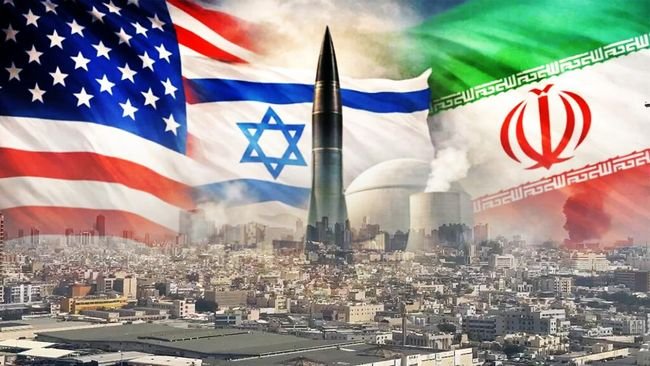
JAKARTA, JAKTIMES.COM– Tensions in the Middle East are escalating once again. Strikes carried out by Israel alongside the United States against Iranian territory have triggered a strong response from Tehran. The situation has grown increasingly tense after Iran reportedly launched retaliatory attacks that affected parts of the Gulf region.
The Chairman of Wahdah Islamiyah, Ustadz Zaitun Rasmin, strongly condemned the attacks conducted by Israel and the United States. He described the military action as a violation of national sovereignty and said it cannot be justified on humanitarian grounds, particularly when it results in civilian casualties, including children.
“An attack against a sovereign nation that results in civilian casualties is clearly unjustifiable,” he said in a statement in Jakarta.
According to him, the escalation of conflict in the Middle East must be addressed proportionally while upholding the principles of justice. He views Iran’s response toward Israel within the framework of self-defense against aggression. However, he warned against the conflict expanding further and dragging Gulf countries—many of whose populations are Muslim—into the confrontation.
Ustadz Zaitun also referred to the presence of U.S. military bases in several Gulf countries. In his view, this situation cannot be separated from security concerns and the defense limitations faced by individual states. Therefore, he stressed that the issue must be understood comprehensively rather than oversimplified.
On the Board of Peace
Regarding narratives linking the current escalation to the Board of Peace (BoP), he emphasized the importance of accurate analysis.
“Directly linking this conflict to the Board of Peace is not chronologically accurate, because the attacks against Iran had already occurred earlier. Therefore, it is inappropriate to associate the recent military strikes with the BoP forum,” he explained.
As for calls urging Indonesia to withdraw from the BoP, he said such views are legitimate aspirations within a democratic system. Nevertheless, he reminded the public that any position should consider broader public interest and the opportunities for international diplomacy.
He added that the Indonesian government should continue to prioritize active diplomatic channels, while society and the Muslim community can contribute through humanitarian initiatives, fundraising efforts, and constructive public discourse.
Avoiding Polarization
Amid the rapid flow of information and increasingly polarized opinions, Ustadz Zaitun urged Muslims to remain clear-minded and to understand the long historical context of conflicts in the region.
“Let us use our conscience and clear thinking, remain objective, and not forget history so that we do not misjudge the situation and unity among Muslims can be preserved,” he said.
He emphasized that the public should not merely react emotionally to unfolding events. Instead, every stance should be measured through the principles of justice, humanity, and unity.
The escalating conflict has also become a test for global diplomacy and international humanitarian solidarity. The question now is: how should Indonesia position itself? Both the government—through official diplomatic channels—and society—through awareness and objective perspectives—must work hand in hand to ensure Indonesia’s contribution remains within the framework of global peace and justice (Wan)