

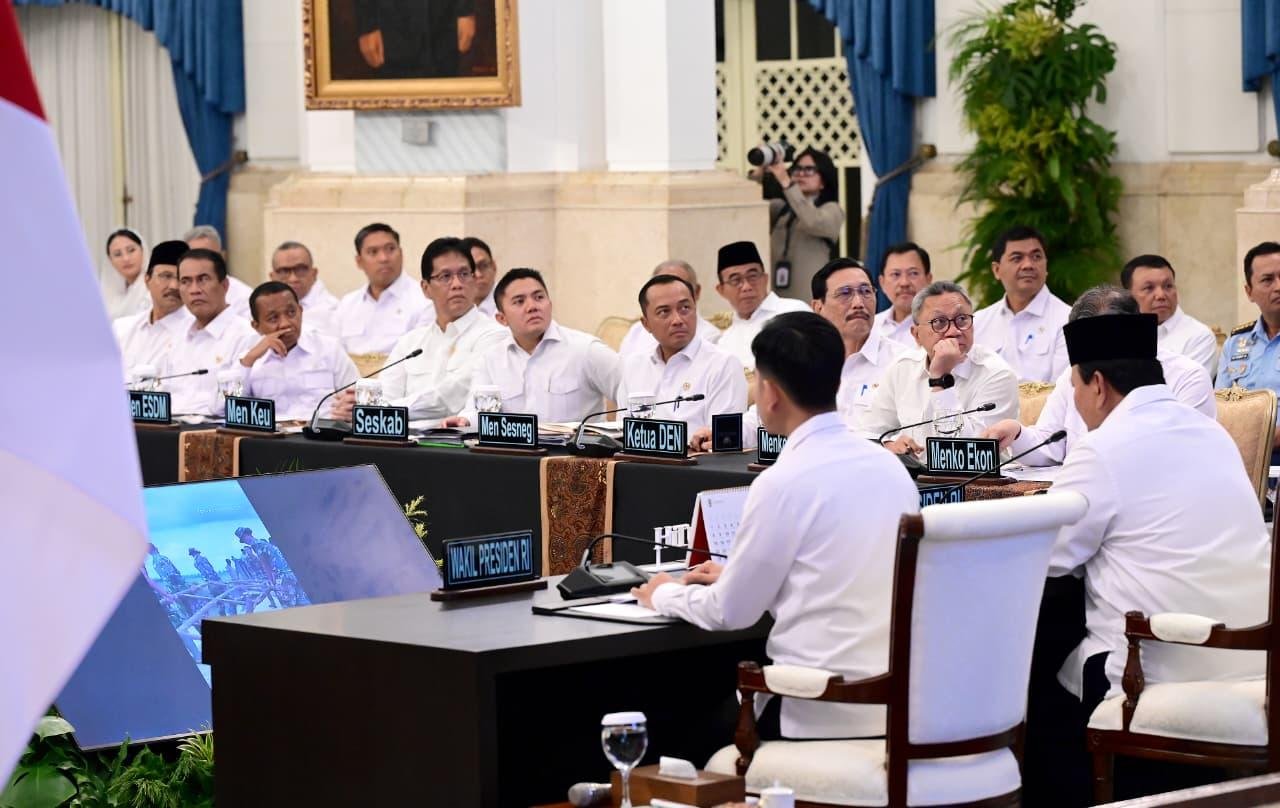
JAKARTA ,JAKTIMES.COM– Indonesia’s national economy remains resilient and on a solid footing, with the government optimistic that economic growth will exceed 5 percent by the end of 2025. The outlook was presented during a Cabinet Plenary Meeting chaired by President Prabowo Subianto at the State Palace in Jakarta on Monday (December 15, 2025).
At the meeting, Coordinating Minister for Economic Affairs Airlangga Hartarto delivered a comprehensive report on the latest macroeconomic conditions, year-end consumption stimulus measures, and policies aimed at strengthening household economic welfare.
According to Airlangga, key macroeconomic indicators remain stable and positive as Indonesia approaches the end of the year.
“Macroeconomic indicators remain strong, Mr. President. Our stock market index has reached an all-time high, rising 20 percent since January, which is among the highest increases in Asia,” Airlangga said.
He added that Indonesia continues to record a surplus in its trade balance and current account, while foreign exchange reserves remain at a high level. Credit growth has also stayed positive, supported by strong liquidity, a factor expected to contribute positively to economic performance in 2026.
“Credit growth remains solid at 7.36 percent. Meanwhile, primary money injection has grown by 13.3 percent to Rp2,136 trillion. This will have a positive impact on next year’s economy,” he explained.
Based on these developments, the government is confident that Indonesia’s economic growth target for 2025 will be achieved.
“We are optimistic that the 5.2 percent growth target this year will be met. Growth in the fourth quarter is also expected to exceed 5.4 percent,” Airlangga said.
To maintain growth momentum, the government is actively encouraging household consumption through various Christmas and New Year spending programs, both via online platforms and national retail outlets. The tourism sector is also being energized through a series of major national events held throughout December.
“There are 37 events taking place this month, which will further stimulate domestic mobility and economic activity,” he noted.
To support public mobility during the year-end holiday season, Airlangga also proposed flexible work arrangements.
“We are proposing work-from-anywhere and work-from-everywhere policies,” he said.
Concluding his report, Airlangga highlighted the government’s efforts to strengthen household financial well-being, including the transformation of the National Council for Financial Inclusion into the National Council for Financial Well-Being. He also pointed to Indonesia’s rising financial inclusion rate.
“Our financial inclusion rate has reached 92.7 percent, with financial literacy at 66.4 percent—higher than the OECD average of 62 percent,” he concluded (Wan)