

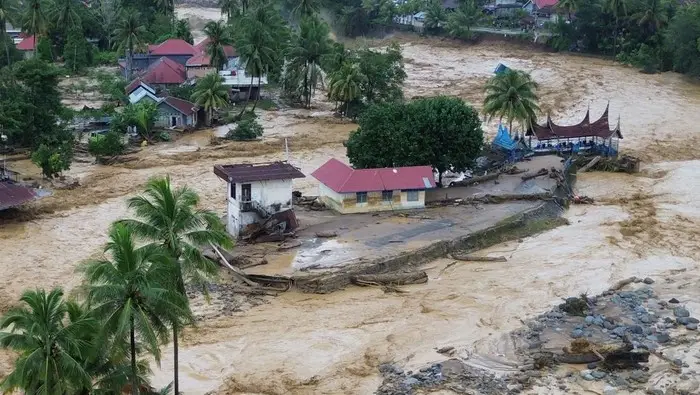
A snapshot of one of the areas affected by the Sumatra floods. Photo: ANTARA FOTO/Iggoy el Fitra.
JAKARTA, JAKTIMES.COM— Indonesia is grappling with one of the deadliest natural disasters in its recent history after catastrophic floods and landslides swept through three provinces on the island of Sumatra, killing at least 921 people and leaving nearly 400 missing, according to the National Disaster Management Agency (BNPB).
The scale of the devastation — stretching from Aceh in the far west to the rugged highlands of North Sumatra and the river valleys of West Sumatra — has displaced close to one million residents, overwhelming emergency shelters and prompting urgent calls for expanded relief operations.
The updated figures were delivered by BNPB chief Lt. Gen. Suharyanto during a closed-door briefing with President Prabowo Subianto and senior officials on Sunday. “As of today, Mr. President, 921 fatalities have been recorded,” he said in the meeting summary released to the media.
Aceh Hit Hardest, With Entire Districts Still Cut Off
Among the affected provinces, Aceh has endured the heaviest loss. BNPB lists 366 deaths and 97 people still unaccounted for, while more than 914,000 residents have been forced to leave their homes.
Several areas, including Bener Meriah and Central Aceh, remain isolated due to washed-out roads, collapsed bridges, and continuing rainfall. Authorities described conditions there as “severely challenging,” with rescue teams taking hours to reach villages now surrounded by debris fields and unstable slopes.
North and West Sumatra Also Reeling
In North Sumatra, officials confirmed 329 deaths, with 82 still missing. Further south, in West Sumatra, 226 fatalities have been recorded, and at least 213 people remain unaccounted for as search operations push into remote ravines and riverbanks.
Across the island, rescue crews are contending not only with treacherous terrain but also with persistent rainfall and aftershocks of soil movement, which have complicated efforts to deploy heavy machinery and airlift supplies.
BNPB warned the death toll could continue to climb.
A Humanitarian Emergency and a Climate Warning
The combined floods and landslides — triggered by days of extreme rainfall — have renewed concerns over Indonesia’s vulnerability to hydrometeorological disasters, which experts say are intensifying under global climate change.
Environmental analysts point to a familiar combination of stressors: degraded watersheds, deforestation in upstream areas, and rapid land conversion for plantations and mining. These factors, they argue, magnify the destructive power of heavy storms, turning seasonal rains into lethal torrents.
Government agencies have begun distributing tents, fuel, medical kits, and food supplies across the affected provinces, while the military works to restore access to cut-off districts. Yet many local officials caution that even with reinforced support from Jakarta, recovery will take months — if not years.
Calls for Long-Term Solutions Amid the Ruins
As emergency operations continue, environmental groups are urging the administration to pair short-term rescue efforts with long-term reforms. These include ecosystem restoration, stricter land-use regulation, and a more robust early-warning system.
Without such measures, they warn, disasters like the one ravaging Sumatra may become even more frequent — and more deadly (Wan)